
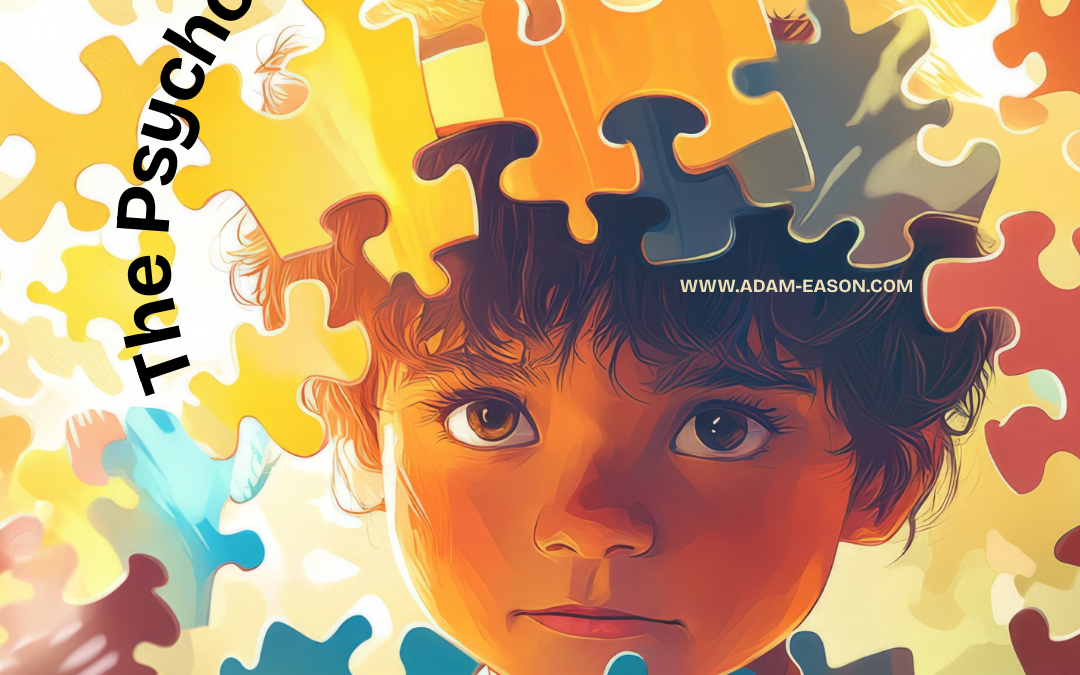
The psychology of curiosity? I didn’t really think I’d write an article about this topic until I had children and saw how they sought to explore and investigate so much of life all the time. Curiosity is more than a charming personality trait or a childhood habit — it is a powerful psychological tool that fuels learning, creativity, and personal growth. Modern research in psychology shows that cultivating curiosity has direct benefits for mental well-being, cognitive engagement, and emotional resilience.
Here today then, I’m exploring the psychology of curiosity, why it matters for lifelong learning, creativity, and well-being, and providing a bunch of evidence-based strategies for developing curiosity in everyday life.
What Is Curiosity? Understanding Curiosity from a Psychological Perspective
The psychology of curiosity defines curiosity as a motivational state that drives the desire for new information, experiences, or understanding (Loewenstein, 1994). Curiosity is not passive; it involves noticing gaps in knowledge and actively seeking to fill them.
There are several forms of curiosity:
Epistemic curiosity: Seeking knowledge and understanding.
Perceptual curiosity: Interest triggered by novel or ambiguous sensory experiences.
Diversive curiosity: Desire for novelty and stimulation.
Specific curiosity: Focused investigation to answer a particular question.
Curiosity is inherently approach-oriented. Rather than avoiding uncertainty, curious individuals move toward it, making curiosity a key driver of psychological growth and cognitive engagement.
How Curiosity Drives Lifelong Learning
Curiosity significantly enhances learning and memory. Neuroscientific studies show that curiosity activates the dopaminergic reward system, particularly the ventral striatum, which in turn enhances hippocampal function — the brain’s key memory hub (Gruber, Gelman, & Ranganath, 2014).
This means that curiosity-driven behaviour doesn’t just help us acquire knowledge; it primes the brain to learn more efficiently and retain information better. Curious individuals also process information more deeply, integrate it with existing knowledge, and are more motivated to explore further.
Curiosity and Intellectual Humility
Curiosity is closely linked to intellectual humility — the recognition that our knowledge is incomplete. People high in curiosity are more open to revising beliefs and exploring new ideas, tolerating ambiguity rather than fearing it (Kashdan et al., 2009).
As philosopher Bertrand Russell said:
“The whole problem with the world is that fools and fanatics are always so certain of themselves, and wiser people so full of doubts.”
Curiosity allows doubt to be productive rather than paralysing, enhancing lifelong learning and adaptability.
Curiosity, Creativity, and Cognitive Flexibility
Curiosity fuels creativity by encouraging exploration beyond familiar ideas. It supports:
Cognitive flexibility – the ability to adapt thinking to new situations.
Divergent thinking – generating multiple solutions to a problem.
Openness to experience – embracing new perspectives.
By driving exploration and experimentation, curiosity strengthens creative thinking and promotes flexible problem-solving. It also helps maintain cognitive plasticity throughout life, supporting mental sharpness in adulthood and older age.
Curiosity and Psychological Well-Being
Reducing Anxiety and Rumination
Curiosity shifts attention away from self-focused rumination toward engagement with the world. Curious individuals tend to ask questions like “What can I learn from this?” rather than “What is wrong with me?”
Research shows that curiosity is linked to lower anxiety and depressive symptoms, particularly when individuals approach emotions with interest rather than avoidance (Kashdan & Steger, 2007).
Enhancing Meaning and Life Satisfaction
Curiosity contributes to eudaimonic well-being, the sense that life is meaningful and purposeful. Curious individuals engage with the world in a growth-oriented way, discovering opportunities for insight, learning, and self-improvement.
As William James noted:
“The greatest discovery of my generation is that a human being can alter his life by altering his attitudes of mind.”
Curiosity cultivates a mindset where life itself becomes a process of continuous discovery.
Curiosity-Driven Behaviour and Cognitive Engagement
Curiosity is expressed through behaviour. Examples of curiosity-driven behaviour include:
Asking deeper questions during conversations
Exploring unfamiliar topics, hobbies, or disciplines
Reflecting on emotional experiences with openness
Engaging with challenging ideas rather than avoiding them
Such behaviours promote cognitive engagement, which strengthens attention, motivation, learning, and mental well-being. Moreover, curiosity-driven behaviour is self-reinforcing: the more we explore, the more competent we feel, which fuels further curiosity.
Can Curiosity Be Developed?
Yes. While some people are naturally more curious, curiosity is malleable and learnable. Modern life often suppresses curiosity through time pressure, fear of failure, or passive consumption of information. However, research shows that intentional strategies can nurture curiosity in adults.
Evidence-Based Strategies to Develop Curiosity
Here are practical, research-informed ways to cultivate curiosity and reap its benefits for learning, creativity, and psychological well-being:
Ask More Questions
Curiosity thrives on questions rather than answers. Ask yourself:
“What else could be true?”
“What am I missing here?”
“Why does this matter?”
Generating questions actively enhances comprehension and retention.
Replace Judgment with Inquiry
Avoid immediate evaluation. Instead of judging experiences as “boring” or “stressful,” explore them non-judgmentally:
“What makes this feel this way?”
“What sensations or thoughts are present?”
This approach increases curiosity and reduces emotional reactivity.
Introduce Small Novelty Daily
Curiosity can be stimulated by simple changes, such as:
Taking a new route to work
Trying a new book, podcast, or hobby
Exploring unfamiliar conversations
Novelty boosts dopamine, motivating further exploration.
Tolerate Not Knowing
Curiosity requires comfort with uncertainty. Allow questions to remain open rather than rushing to closure. This supports persistence and deep learning.
Develop Emotional Curiosity
Approach emotions with interest rather than avoidance:
“What is this emotion trying to tell me?”
“Where do I feel it in my body?”
This strengthens emotional regulation and reduces distress.
Engage in Deep Learning
Avoid passive information consumption. Instead:
Take notes, summarise ideas, and reflect
Discuss concepts with others
Connect new knowledge to existing mental frameworks
Active engagement enhances both curiosity and retention.
Treat Challenges as Experiments
View difficulties as opportunities for exploration. This growth-oriented mindset encourages learning from setbacks and increases resilience.
Self-hypnosis can help greatly with this and with a number of other areas detailed in this article, learn more at this page of my college website: Learn Self-Hypnosis Here.
Curiosity: A Lifelong Psychological Resource
The psychology of curiosity demonstrates that curiosity is more than a personality trait — it is a lifelong resource for personal growth, creativity, and psychological well-being. By actively cultivating curiosity, we can enhance learning, manage stress, improve emotional intelligence, and create a more meaningful life.
In a fast-paced, uncertain world, curiosity invites us to engage, explore, and grow — and it reminds us that learning is a lifelong adventure.
Have some of themes here resonated with you? Then have a read of these pages:
Would you like a satisfying and meaningful career as a hypnotherapist helping others? Are you a hypnotherapist looking for stimulating and career enhancing continued professional development and advanced studies? Adam Eason’s Anglo European training college.
References
Berlyne, D. E. (1960). Conflict, arousal, and curiosity. McGraw-Hill.
Gruber, M. J., Gelman, B. D., & Ranganath, C. (2014). States of curiosity modulate hippocampus-dependent learning via the dopaminergic circuit. Neuron, 84(2), 486–496.
Kashdan, T. B., & Steger, M. F. (2007). Curiosity and pathways to well-being and meaning in life. Journal of Personality and Social Psychology, 92(4), 639–654.
Kashdan, T. B., et al. (2009). Curiosity and exploration: Facilitating positive subjective experiences and personal growth opportunities. Journal of Personality Assessment, 91(4), 292–305.
Loewenstein, G. (1994). The psychology of curiosity: A review and reinterpretation. Psychological Bulletin, 116(1), 75–98.
Silvia, P. J., et al. (2014). Openness to experience, curiosity, and creativity. Journal of Creative Behavior, 48(1), 1–20.


