
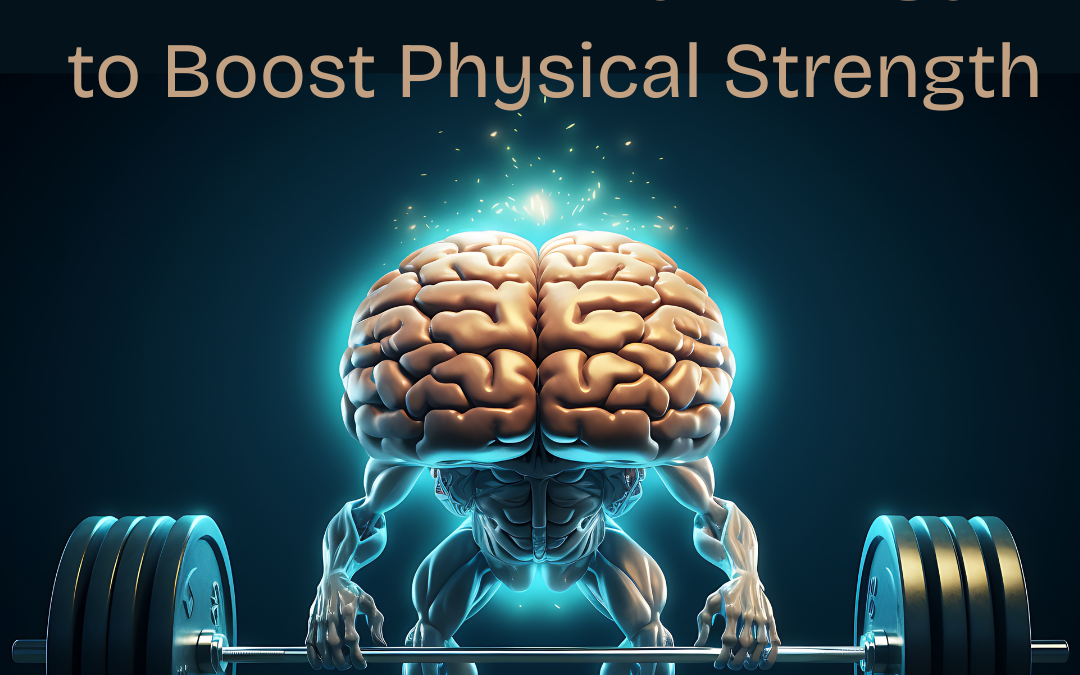
You’ll know that in recent years, learning how to use psychology to boost physical strength has been a pet topic of mine. My social media stories regularly show me lifting weights, increasing strength and sharing how I use psychology to boost physical strength, and at the UK Hypnosis Convention last year, I even gave a lecture and brief demonstration on the topic.
The mind is not merely a passive observer during physical exertion — it is an active participant that can significantly enhance or hinder physical performance. Psychological factors such as motivation, focus, and mental resilience play crucial roles in determining how much strength we can mobilise during physical tasks. Here today, I thought I’d delve into the science of how the mind influences physical strength and provide a few evidence-based strategies to use psychology to boost physical strength.
The Psychological Foundations of Physical Strength
- The Central Nervous System and Strength Mobilisation
The brain and spinal cord constitute the central nervous system (CNS), which is responsible for initiating and controlling muscle contractions. When lifting weights or performing other strength-based activities, the CNS recruits motor units—combinations of motor neurons and the muscle fibres they control. The efficiency and extent of this recruitment can be influenced by psychological factors such as focus, arousal, and mental fatigue. - The Role of Motivation and Expectancy
Psychological theories suggest that an individual’s expectations and motivation levels can influence their physical performance. For instance, the Yerkes-Dodson law posits that performance increases with physiological or mental arousal, but only up to a point. Beyond this optimal level, performance can decline. Therefore, maintaining an optimal level of arousal is crucial for maximising strength output.
Evidence-Based Psychological Strategies to Enhance Physical Strength
- Visualisation and Mental Imagery
Visualisation involves creating vivid mental images of performing a task successfully. Research indicates that mental imagery can activate neural pathways involved in actual performance, leading to improved motor skills and strength performance. Athletes often use visualisation to mentally rehearse movements, enhancing their ability to perform them physically. - Self-Talk and Cognitive Restructuring
The internal dialogue individuals maintain can significantly impact their performance. Positive self-talk can enhance confidence, focus, and resilience, while negative self-talk can have the opposite effect. Techniques such as affirmations, thought-stopping, and reframing can help athletes maintain a positive mindset, thereby improving strength performance. - Goal Setting and Implementation Intentions
Setting specific, measurable, achievable, relevant, and time-bound (SMART) goals can provide direction and motivation. Implementation intentions—”if-then” plans—can help individuals translate intentions into actions, enhancing goal attainment. For example, an athlete might plan, “If I feel fatigued during training, then I will focus on my breathing to maintain performance.” - Motor Imagery and Mental Rehearsal
Motor imagery involves mentally simulating movements without actual physical execution. This technique has been shown to activate similar neural circuits as actual movement, leading to improved motor performance. Athletes use motor imagery to rehearse techniques, enhancing their physical strength and performance.
Self-hypnosis can advance mental rehearsal, self-talk and visualisation skills ,mentioned here, learn more at this page of my college website: Learn Self-Hypnosis Here.
- Mind-Muscle Connection
Focusing attention on the specific muscle being worked during exercise can enhance muscle activation and performance. This mind-muscle connection helps ensure proper form and can lead to greater strength gains. - Neuroplasticity and Strength Training
Engaging in regular strength training can lead to neuroplastic changes in the brain, enhancing cognitive functions such as memory, attention, and executive function. These cognitive improvements can, in turn, support better focus and performance during strength activities. - The Power of Rest and Recovery
Mental recovery is as important as physical recovery. Engaging in activities such as journaling, meditation, or spending time in nature can help reduce mental fatigue and enhance performance. Just as muscles need rest to grow, the brain requires rest to function optimally.
Practical Applications to Use Psychology to Boost Physical Strength
- Develop a Pre-Training Routine
Incorporate visualisation, positive self-talk, and goal setting into a pre-training routine to mentally prepare for strength sessions. This mental preparation can enhance focus and performance during training. - Engage With Self-Hypnosis Techniques
Once you’ve learned self-hypnosis (Learn Self-Hypnosis Here) there are a range of ways you can use it to help advance your physical strength. You might like to read these articles to be more specific:
- Using Self-Hypnosis to Mobilise Effort and Strength.
- The Hypnotic Power Breath: For Explosive Strength and Energy.
- Altering Our Perceived Level Of Effort When Running Using Self-Hypnosis (can be applied to strength)
- Monitor and Reflect on Progress
Keeping a training journal to track physical and psychological progress can help identify patterns and areas for improvement. Regular reflection can enhance motivation and goal attainment. - Educate on the Importance of Mental Recovery
Understanding the role of mental recovery in strength development can help athletes prioritise rest and avoid burnout. Engaging in activities that promote mental well-being can enhance overall performance. - Implement Mindfulness Techniques
Practicing mindfulness can help athletes maintain focus and manage stress, leading to improved performance. Techniques such as deep breathing and body scanning can enhance awareness and control during strength activities.
Conclusion
The integration of psychological strategies into strength training can lead to significant improvements in physical performance. They have certainly helped me a great deal. By understanding and harnessing the power of the mind, we can enhance physical strength. These evidence-based strategies provide an initial approach to developing both mental and physical strength, I hope you find them useful and beneficial.
Have some of themes here resonated with you? Then have a read of these pages:
Would you like a satisfying and meaningful career as a hypnotherapist helping others? Are you a hypnotherapist looking for stimulating and career enhancing continued professional development and advanced studies? Adam Eason’s Anglo European training college.
References
Gollwitzer, P. M. (1999). Implementation intentions: Strong effects of simple plans. American Psychologist, 54(7), 493-503.
Gollwitzer, P. M., & Sheeran, P. (2006). Implementation intentions and goal achievement: A meta-analysis of effects and processes. Advances in Experimental Social Psychology, 38, 69-119.
Roth, M., et al. (1996). Mapping motor representations with PET. Nature.
Suinn, R. M. (1990). Cognitive Sport Psychology. Sport Science Associates.
Verywell Health. (2023). Does the Wim Hof Breathing Exercise Work? https://www.verywellhealth.com/wim-hof-breathing-exercise-5498738
Wittbrodt, A. (2025). LEVEL UP FITNESS: Training your mind like you train your body. Our Midland. https://www.ourmidland.com/lifestyles/article/adam-wittbrodt-fitness-levelup-20369699.php

